
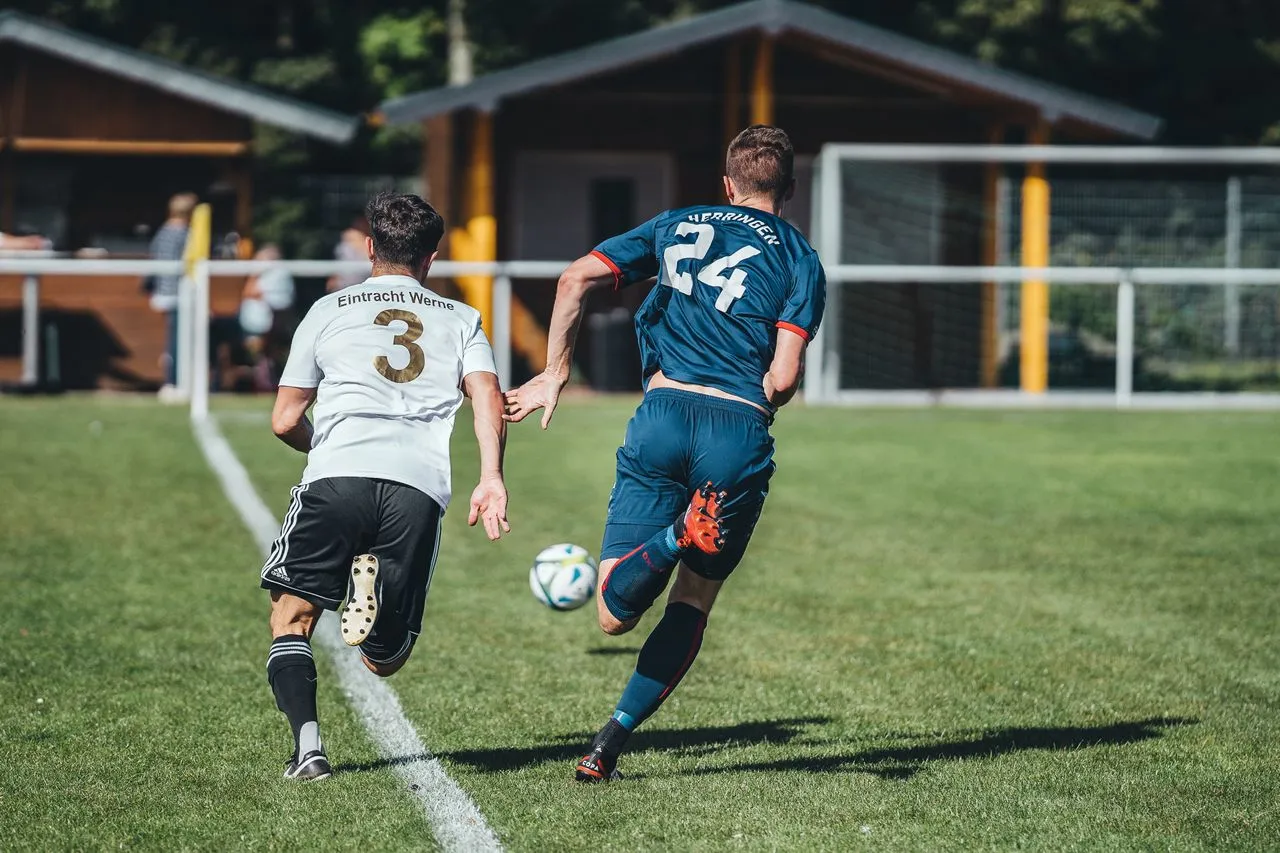
Ask a young player what position they want to play and a huge number will say winger. It looks like the most fun job on the field, running at defenders in open space. What most don’t realize is that the position asks for more discipline than almost any other spot on the pitch. A good winger isn’t just fast and skillful. They know when to go and when to hold.
This is the second post in our Position Series, where we break down what it actually takes to play each position well. We covered the striker first. Now we’re turning to the winger, a position that draws in a lot of our most athletic young players and gets misunderstood just as often.
The Instincts That Show Up Before the Skill Does
Before a player has a full bag of tricks, you can spot a natural winger by their relationship with space. They want the ball in stride, not to feet, and check their shoulder before the pass arrives. They’re comfortable being isolated against a defender, a mindset a lot of young players shy away from.
We’ve seen players in our youth academy who weren’t the flashiest dribblers on the team but still terrorized defenders, because they knew how to receive the ball on the move and attack a defender’s weaker side. That instinct to want the ball 1v1, rather than avoid it, is one of the first things our coaches look for.
Technical Skills That Actually Matter for a Winger
Dribbling gets all the attention, but a winger’s first touch out of their feet is what actually creates separation. A heavy first touch that pushes the ball past a defender does more damage than three step-overs in a row. Wingers need close control at speed, not standing still.
Crossing gets neglected once players get comfortable beating a defender, but a winger who can’t deliver a dangerous ball into the box is only half useful. Going both inside and outside matters too, since a predictable winger who always cuts the same way gets shut down by halftime. Comfort on both feet separates a good winger from a great one.
Reading the Game: The Tactical Side of Playing Winger
A lot of young wingers think their only job is to beat their marker. Good ones understand they’re part of a bigger picture. They track when the fullback behind them is overlapping, and they know when to hug the touchline to stretch the defence and when to tuck inside and combine.
Knowing when to take a defender on and when to play the simple pass is one of the harder things to teach, because it asks a naturally attacking player to sometimes choose the boring option. A winger who forces a dribble in a bad spot leaves their team exposed. A winger who reads the moment picks the right option, and that’s what wins games.
The Physical Traits That Separate Good Wingers from Great Ones
Speed matters more here than almost anywhere else on the field, but straight-line speed alone doesn’t create separation. Change of direction is what actually beats a defender, since most 1v1 duels are won or lost in a single sharp movement, not a long sprint.
Endurance matters just as much, since a real winger is defending back to their own box one minute and sprinting the length of the field the next. That up-and-down running load is an area we build into fitness work specifically for wide players.
The Mental Game: Trying Again After a Failed Move
This is where a lot of talented wingers stall out. Dribbling past a defender fails more often than it works, even for good players, and a winger who gets tentative after losing the ball a couple times stops being useful. Confidence has to survive failure, because failure is built into the job.
The best wingers we coach keep asking questions of the defender in front of them, shift after shift. They lose the ball, reset, and ask for it again on the next attack. We’d rather a winger try five moves and lose the ball three times than stop attacking out of fear of getting caught.
How We Develop Wingers at South Van FC
We build winger training around real 1v1 and 2v1 situations, not cone drills run in isolation. Repeated duels against a live defender teach players to read a body shape and make a decision, a different skill than dribbling through cones untouched.
Small-sided games on a narrow field force quick decisions in tight spaces and reward players who combine instead of running into a dead end. We also spend real time on the defensive side of the position, since a winger who won’t track back becomes a liability no matter how good they are going forward. If you want a direct read on how our coaching staff develops wide players, a free player evaluation is the easiest way to find out.
Building a Winger Takes More Than Speed and Tricks
Playing winger well is instincts, technique, decision-making, and the confidence to fail and go again, all working together. It looks like pure fun from the sideline and asks for real discipline once you’re out there.
If your young player loves the ball at their feet in space and wants to take defenders on, our coaches can help sharpen that instinct into a real position. Book a free player evaluation and get a real read on your player’s game. Stay tuned for the next post in the Position Series.
Harjit is the founder and academy director at South Van FC. He built the club from the ground up in South Vancouver with a focus on long-term player development. If you have questions about the programme or want to talk development, reach out at southvanfc@gmail.com.
South Van FC is a community football club based in South Vancouver, BC. We run a youth development academy and a VMSL Men’s team, built around one philosophy: develop real players, technically sharp, tactically aware, and mentally tough. Learn more at southvanfc.com.