
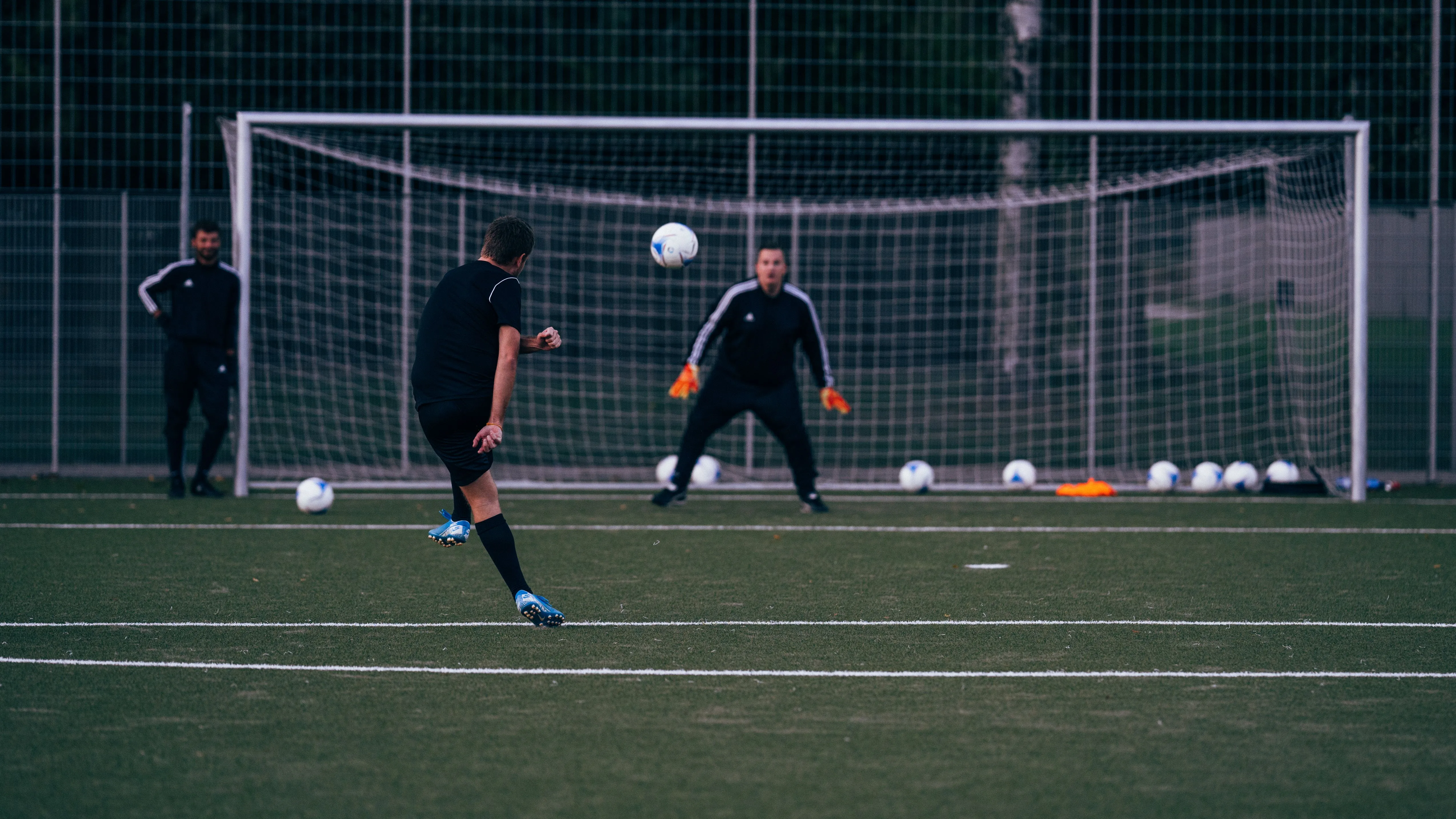
Every team has ten players trying to make something happen and one player whose entire job is to finish it. That’s the striker. It’s the most watched position on the field and, for a lot of young players, the most misunderstood. Being fast or being the top scorer on a team doesn’t automatically make someone a striker. The position asks for a specific mix of instinct, timing, and composure that either gets built early or gets left behind.
This is the first post in our Position Series, where we break down what it actually takes to play each position well, not just what the role looks like on a formation sheet. We’re starting with the striker because it’s the position players, especially young payers, want to play the most, and because it’s one of the easiest positions to misjudge from the sideline.
The Instincts That Show Up Before the Skill Does
Before a player has a great first touch or a clean finish, you can usually spot a striker by what they do without the ball. They’re the ones who keep drifting into the space between the last two defenders, even when nobody told them to. They time their runs just late enough to stay onside instead of camping on the last defender’s shoulder.
That’s not something you teach in a single session. It’s an instinct our coaches look for early and build training around once we see it.
Technical Skills That Actually Matter for a Striker
Strikers get judged on finishing, but finishing is the last step in a much longer chain. A striker’s first touch has to point them toward danger, not just control the ball. Taking a touch that sets up a shot is different from taking a touch that just stops the ball dead.
Shooting technique matters, but so does shooting with both feet and from awkward body positions, a great example is England’s striker Harry Kane’s 2nd goal against D.R Congo in the World Cup Round of 16, since most real chances in a game don’t arrive perfectly set up. Strikers also need a strong first touch under pressure, since defenders are usually tight to them the moment the ball arrives. And holding the ball up, using your body to shield it and bring a teammate into play, is a skill that gets overlooked until a striker doesn’t have it.
Reading the Game: The Tactical Side of Playing Striker
A lot of parents assume strikers just stand up front and wait. Good ones are constantly working, even when the ball is nowhere near them. They’re checking their shoulder to see where the defender is, adjusting their position based on where the ball is likely to go, and reading whether to run in behind or drop into space to link play.
Knowing when to make a run and when to hold your position is one of the harder things to teach a young striker, because it requires patience, which isn’t always a young player’s strongest trait. A striker who makes every run at full speed the second the ball is played back gets caught offside constantly. A striker who reads the moment gets through on goal.
The Physical Traits That Separate Good Strikers from Great Ones
Speed helps, and it’s usually the first thing people notice about a young striker. But explosiveness over the first few steps matters more than top-end speed, since most striker movements happen in tight windows, not open sprints. That first burst to get half a step ahead of a defender is often the difference between a chance and a blocked shot.
Strength matters too, especially as players get older and defenders get bigger and stronger. A striker who can hold their ground under contact, protect the ball, and still get a shot away is far more dangerous than one who gets knocked off the ball every time someone leans on them. Balance and body control under pressure belong in every striker’s training program, not just fitness work.
The Mental Game: Missing and Coming Back for the Next One
This is where a lot of talented young strikers get stuck. The position comes with more visible failure than almost any other spot on the field. Miss an open chance in central midfield and nobody remembers. Miss an open chance as a striker and the whole sideline sees it.
The best strikers we’ve coached share one trait more than any other: a short memory. They miss a chance, and thirty seconds later they’re already making the next run like nothing happened. That composure isn’t personality, it’s a skill, and it’s one our coaches actively build through how we talk to players after a missed chance in training. We’d rather a striker take five shots and miss four than pass up chances out of fear of missing.
How We Develop Strikers at South Van FC
We build striker training around repetition in realistic situations, not standing still and shooting at an empty net. Finishing drills under pressure, with a coach closing in or a time limit on the shot, teach players to make decisions the way a real game demands.
Small-sided games where goals only count from inside the box are one of our favourite tools, because they force strikers to find dangerous positions instead of shooting from wherever the ball happens to land. We also spend real time on movement without the ball, since that’s the part of striker play that separates players once everyone’s technical level starts to look similar. If you want to see how our coaching staff works with strikers specifically, a free player evaluation is the easiest way to get a direct read on where your player stands.
Building a Striker Takes More Than a Good Finish
Playing striker well is instincts, technique, patience, and a short memory, all working together. None of it happens overnight, and none of it happens by accident. It’s built the same way we build every position at South Van FC: with intention, over time, one training session at a time.
If your young player has that instinct to find space near goal, or if you’re not sure yet whether striker is the right fit, our coaches can help you find out. Book a free player evaluation and get a real read on your player’s game. And stay tuned for the next post in the Position Series, where we break down what it takes to play centre back.
Harjit is the founder and academy director at South Van FC. He built the club from the ground up in South Vancouver with a focus on long-term player development. If you have questions about the programme or want to talk development, reach out at southvanfc@gmail.com.
South Van FC is a community football club based in South Vancouver, BC. We run a youth development academy and a VMSL Men’s team, built around one philosophy: develop real players, technically sharp, tactically aware, and mentally tough. Learn more at southvanfc.com.