
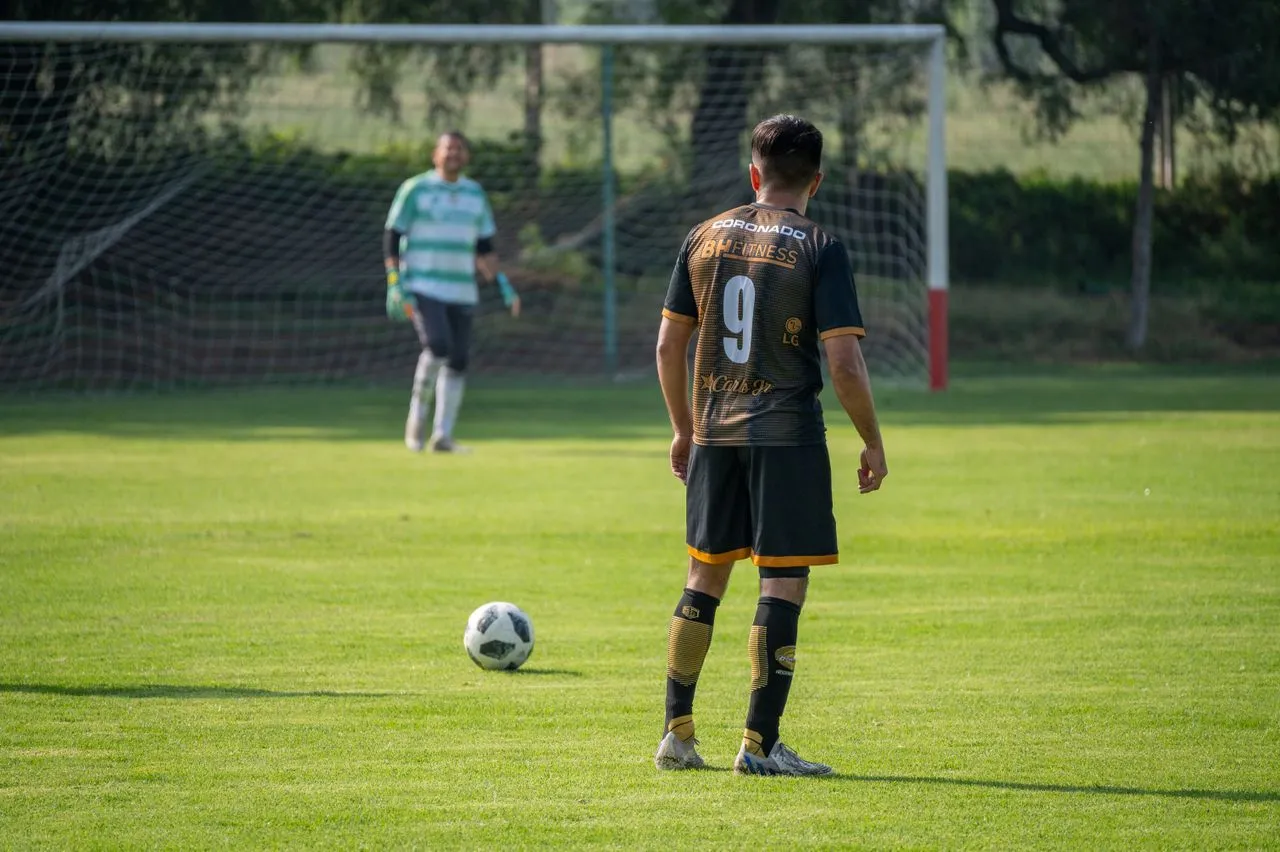
Your keeper has the ball. Instead of booting it upfield, they roll it short to a centre back. A midfielder drops in to offer support. The other team starts pressing. And you’re on the sideline thinking: why not just clear it?
This is playing out from the back, and it’s one of the most argued-about tactics in soccer across Vancouver, at every level from youth academies to the South Van FC men’s team. Parents and players question it, some coaches avoid it entirely, and when it goes wrong it goes wrong in the worst possible spot on the field. This is the first post in a new Tactics 101 series where we break down the team tactics you hear coaches shout from the sideline: what they actually mean, why coaches ask for them across age groups, and what to watch for at your next match.
What Playing Out From the Back Actually Means
Playing out from the back is building attacks from your own goal using short passes, rather than clearing the ball long every time your team has possession near its own net. It usually starts with the goalkeeper or centre backs and works through midfield before the ball ever reaches the final third.
In practice, this looks like a keeper rolling the ball to a centre back instead of punting it, a centre back splitting wide to create a passing lane, a defensive midfielder dropping between the centre backs to offer an extra option, and full backs pushing high to stretch the opponent’s press.
None of this happens by accident. It’s a structure that soccer teams practice repeatedly, whether it’s a U10 academy side or a competitive men’s team, so that under pressure, players already know where their options are instead of guessing in the moment.
Why Vancouver Coaches Build Around This Tactic at Every Level
A long clearance gives the ball away roughly half the time. Even a well-struck one is a 50/50 ball in the air that either team can win. Playing out keeps possession in your control and forces the opponent to work for the ball instead of winning it back off a punt.
It also teaches players something a long ball never will: composure under pressure. A defender who can only kick the ball away when it’s near their own goal has a ceiling. A defender who can receive the ball, see the field, and pick the right pass under pressure does not. That composure is exactly what separates players as they move up levels, whether that’s a youth player breaking into a competitive academy team or an adult player trying to earn minutes with the men’s squad, and it’s part of why our coaches build it into training regardless of age group.
There’s also a strategic payoff most parents watching from the sideline don’t see right away. Every time a team plays out successfully, it pulls the opposing forwards higher up the field to press. That opens space behind them. A team that always clears long never creates that space, because the opponent never has to commit numbers forward to win the ball back.
Why It Looks Risky (and Sometimes Is)
If a team turns the ball over in their own third, that’s dangerous. This is why playing out from the back done badly looks worse than just clearing it: a miscontrol near your own 18-yard box is scarier than a long ball landing at midfield.
Coaches who ask for this are making a trade. They accept some short-term risk of an ugly turnover in exchange for long-term development of better decision-makers. That trade only makes sense in training and in games where the scoreline allows for it. A good coach reads the moment; practicing this concept in a friendly is very different from insisting on it in the final five minutes of a tied cup final.
Development and winning aren’t opposites, but they do sometimes pull in different directions. How a coach balances that tells you a lot about their priorities as a club.
Common Mistakes Teams Make Learning This
A few patterns show up again and again when a team, at any age, is still learning to play out from the back. They’re worth knowing so you can recognize progress instead of just panicking at a mistake:
- Players standing still instead of moving to create a passing angle, which forces the ball carrier into a difficult pass instead of an easy one.
- Everyone bunching in the same area, leaving no width, so the opponent only has to defend a small space.
- Panicking under the first bit of pressure and forcing a pass that wasn’t really on.
- The goalkeeper defaulting to a long kick the moment things get uncomfortable, which undoes the whole structure in one touch.
None of these are signs the tactic is wrong. They’re signs the players are still building the picture in their heads of where their teammates are before the ball even arrives, which is exactly the skill this tactic is meant to develop.
How This Tactic Changes Across Age Groups
At younger ages, playing out from the back is less about complex patterns and more about getting comfortable receiving the ball under a bit of pressure instead of panicking. The goal at U8 to U10 is composure, not tactics.
By U12 to U14, players start learning actual shape (who drops, who spreads wide, who stays high), and coaches begin teaching specific patterns rather than just general comfort on the ball.
At the older youth levels and into adult, competitive soccer, this becomes a real tactical weapon rather than just a developmental habit. Teams at South Van FC’s men’s level use it deliberately to draw opponents out and exploit the space that opens up behind their press, the same principle a U10 player is learning, just executed faster, under more pressure, and against opponents actively scouting for the weakness in it.
Conclusion: What to Watch For at Your Next Match
Next time you watch a match, whether it’s professional soccer, a VMSL game, or your own kid’s match, watch the goalkeeper and centre backs the moment they get the ball. Do they immediately look for a teammate close by, or do they default to kicking it long? Then watch the opposing forwards: do they press aggressively to force a mistake, or sit off and let the defense build?
Watch, too, for the players without the ball. A team playing out well has multiple players constantly adjusting their position to stay open, which is easy to miss if you’re only watching the ball. That back-and-forth, ball and off-ball movement together, is the whole tactic playing out in front of you, whether it’s a youth academy match or a South Van FC men’s fixture.
Whether you’re a parent wanting your child to build this kind of composure on the ball, or an adult player looking to sharpen your own game, book a free player evaluation with South Van FC and see how our coaches develop it at every age group.
Dipinder Kainth is a coach at South Van FC, a youth soccer academy and men’s club based in South Vancouver.
South Van FC is a community football club based in South Vancouver, BC. We run a youth academy, an adult 18+ program, and a VMSL Men’s team, built around one philosophy: develop real players, technically sharp, tactically aware, and mentally tough. Learn more at southvanfc.com.