
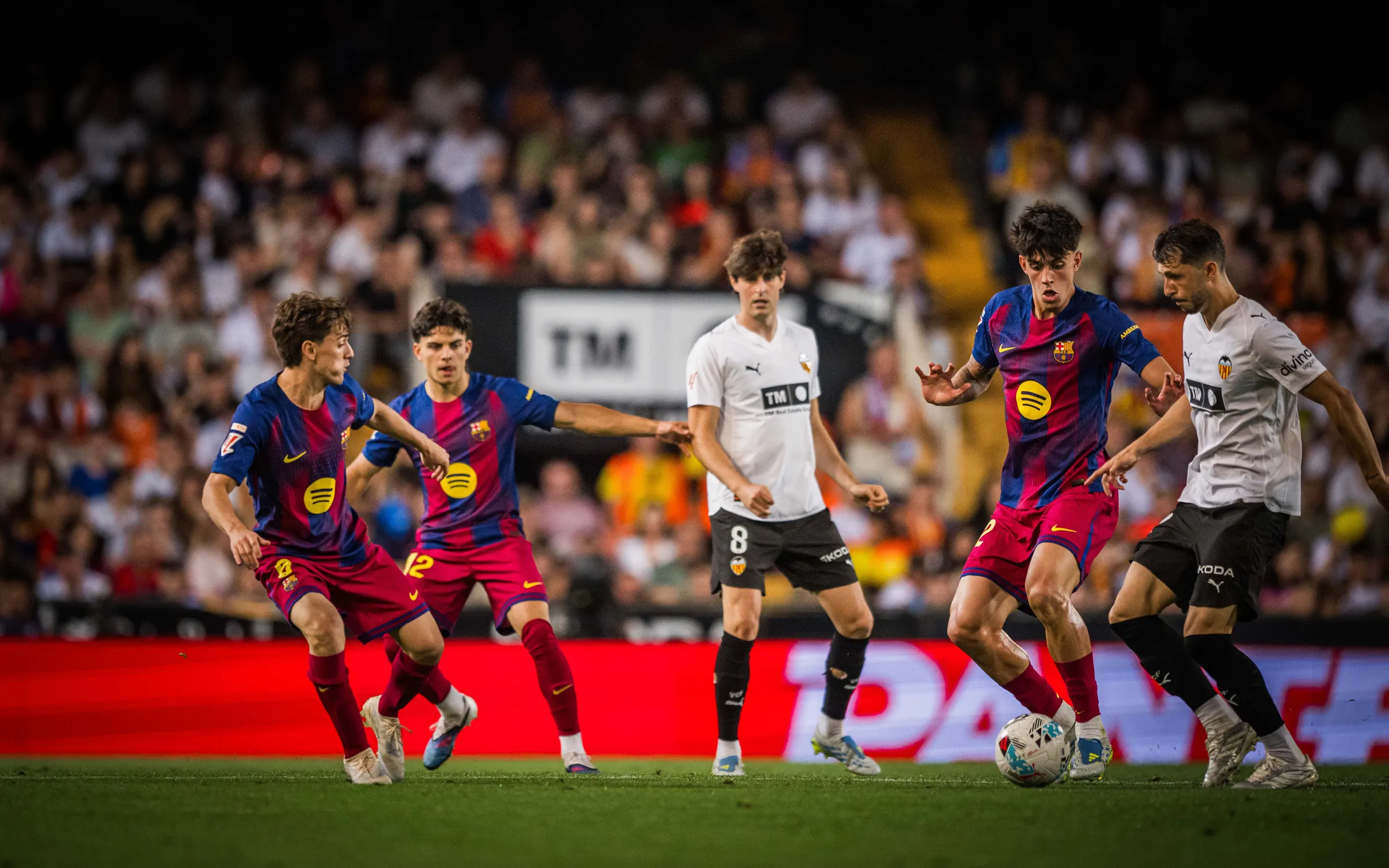
Most people watch soccer the same way: they follow the ball. Where it goes, who has it, whether it ends up in the net. It’s the natural way to watch, and it’s also the reason most young soccer players in Vancouver don’t learn much from watching pro soccer, even when they watch a lot of it.
Here’s the thing about the ball: even for the best players on the pitch, actual time on the ball adds up to only a small slice of the 90 minutes. Everything else, all the movement, all the decisions, all the stuff that separates a good player from a great one, happens in the time when the ball is somewhere else. This post breaks down how to watch a match on your own, with teammates, or with your parents, so it actually turns into development instead of just entertainment.
Why Most Young Players Don’t Learn From Watching
If you’re only tracking the ball, you’re missing almost the entire game. Doesn’t matter if you’re in the stands with your parents, sitting with a couple teammates, or just watching alone on the couch. And it’s a skill, not a talent. You can get better at watching soccer the same way you get better at playing it, with a bit of structure and some repetition.
The good news is that Vancouver is a great city to practice this in right now. The Whitecaps are back playing home matches at BC Place, and there’s high-level soccer on TV or streaming most weeks. You don’t need a stadium seat to start. You just need a plan for where your eyes go.
Pick One Player Who Doesn’t Have the Ball
Next time you’re watching a match, pick a player who’s on the ball the least, and follow only them for five minutes. Ignore the ball completely if you have to.
Watch what they do before they get the ball. Where do they position themselves? Are they checking over their shoulder? Are they making a run to drag a defender out of position, even though they know they won’t get passed to?
Then watch what they do the second after they release it. Most players stop watching right after they pass, but the best players immediately move again, because the pass isn’t the end of their job, it’s the start of the next phase. This one exercise, done consistently, will teach you more about positioning and movement than a highlight reel ever will.
Watch the Player in Your Own Position
If you’re a winger, forget about the striker for a stretch and just lock onto how the wingers move. Some hug the touchline the whole time to pin the fullback back. Others keep drifting inside looking to combine through the middle. Watch for when they actually try to beat their man one-on-one versus when they just play it safe, recycle the ball, and reset the attack.
If you’re a fullback, watch how the pros in that position time their overlaps. There’s a rhythm to it, tied to what’s happening ahead of them, not just bombing forward whenever they feel like it.
This is the fastest way to translate professional soccer into something that actually shows up in your own game on Saturday. Watching a striker do something incredible is entertaining. Watching a player in your position do something specific and repeatable is useful. Our coaches break down these patterns position by position, and you can see more of that in our Position Series.
Count Something
Counting forces your brain to track patterns instead of just reacting to drama. Pick one simple thing to count for a half:
- How many touches does a striker take before the ball is out of danger?
- How many players are involved in the buildup before a shot on goal?
- How many times does a fullback overlap in 45 minutes?
- How many passes happen before the team loses the ball?
You don’t need to write it down or get an exact number. The point isn’t the count. It’s that counting keeps your eyes moving with a purpose instead of drifting toward whatever looks exciting in the moment.
Watch the 15 Seconds Before the Goal
Everyone rewinds the goal. Nobody rewinds the buildup, and that’s backwards. A finish is often just a clean strike or a bounce that goes your way, so there’s not much to actually learn from it. What matters happened 15 seconds earlier: a defender getting dragged out of position, a pass sneaking through two lines, a run into space that wasn’t open a second before.
Next time a replay comes on, watch the buildup before you even bother watching the finish.
Watching With Teammates or Parents
You don’t need a parent to do any of this, but it works well in a group too. If you’re watching with a friend or a few teammates, assign each person a different player or position to track for a half, then compare notes after. Fifteen minutes of comparing what you each noticed is a mini film session, and it’s more useful than just reacting to the score together.
If your parents are watching with you, a few honest questions after the match go further than a full play-by-play breakdown:
- What’s one thing a player in my position did tonight that I don’t do yet?
- What happened right before the goal?
- Was there a moment where a player made himself available even though he didn’t get the ball?
The goal isn’t to quiz. It’s to get a young player talking about what they noticed, rather than just what happened.
Conclusion: Bring It Back to Training
None of this matters if it stays in the stands. The real test is whether what you noticed on Saturday shows up in how you move on Sunday. If you spent a half watching how a winger creates separation from a fullback, try it the next time you’re in that same spot in training. If you counted how often a striker checked his shoulder before receiving, start doing it yourself.
Watching with intent is a form of development, and it’s free. It’s available every time a match is on, whether that’s the Whitecaps at BC Place or a match on TV. Vancouver has had a lot of high-level soccer to watch this year, and young players across the city have more chances than usual to learn this way, right now.
If you’re ready to build a plan around your development, not just your matches, book a free player evaluation with our coaches.
Dipinder Kainth is a coach at South Van FC, working with players in the youth academy in South Vancouver. If you have questions about the programme or want to talk development, reach out at southvanfc@gmail.com.
South Van FC is a community football club based in South Vancouver, BC. We run a youth academy, an adult 18+ program, and a VMSL Men’s team, built around one philosophy: develop real players, technically sharp, tactically aware, and mentally tough. Learn more at southvanfc.com.