
The Long Game
Ask any coach what they want for their players, and you’ll hear the same things: more confidence, sharper technique, better decision-making on the ball. But ask those same coaches what they did at training last Tuesday, and you might get a shrug.
The gap between what we want for players and what we actually build our sessions around is one of the biggest challenges in youth soccer player development. It isn’t something that just happens when kids show up and kick a ball around. It’s intentional. It’s consistent. And it looks a lot different than most people expect.
At South Van FC, we think about developing young soccer players across four pillars: Technical, Tactical, Physical, and Mental. Every session touches all four. Here’s what real development in each one actually involves, and how coaches and players can approach it with purpose.
Technical Skills Are the Foundation, But Not the Whole House
Every conversation about youth soccer training starts with the technical stuff: first touch, passing, dribbling, finishing. And rightly so. Without solid fundamentals, everything else is harder.
But technique is only useful when a player knows when and why to use it. A player who can do a hundred keepy-uppies but freezes when pressed in a game has a technique that isn’t connected to the game yet.
The best training environments develop technique inside realistic game situations. Small-sided games, rondos, and pressure exercises force players to use their skills when it actually counts. Repetition matters, but so does context. Build skills with the game in mind, not just in isolation.
For players: spend time on your weak foot. Not occasionally. Every session. The discomfort is exactly where the growth is.
Tactical Understanding Comes from Playing, Not Just Watching
One of the biggest misconceptions in youth soccer is that tactics are too complex for young players. That’s backwards. Kids can understand shape, movement, and decision-making when it’s taught through playing rather than through PowerPoints.
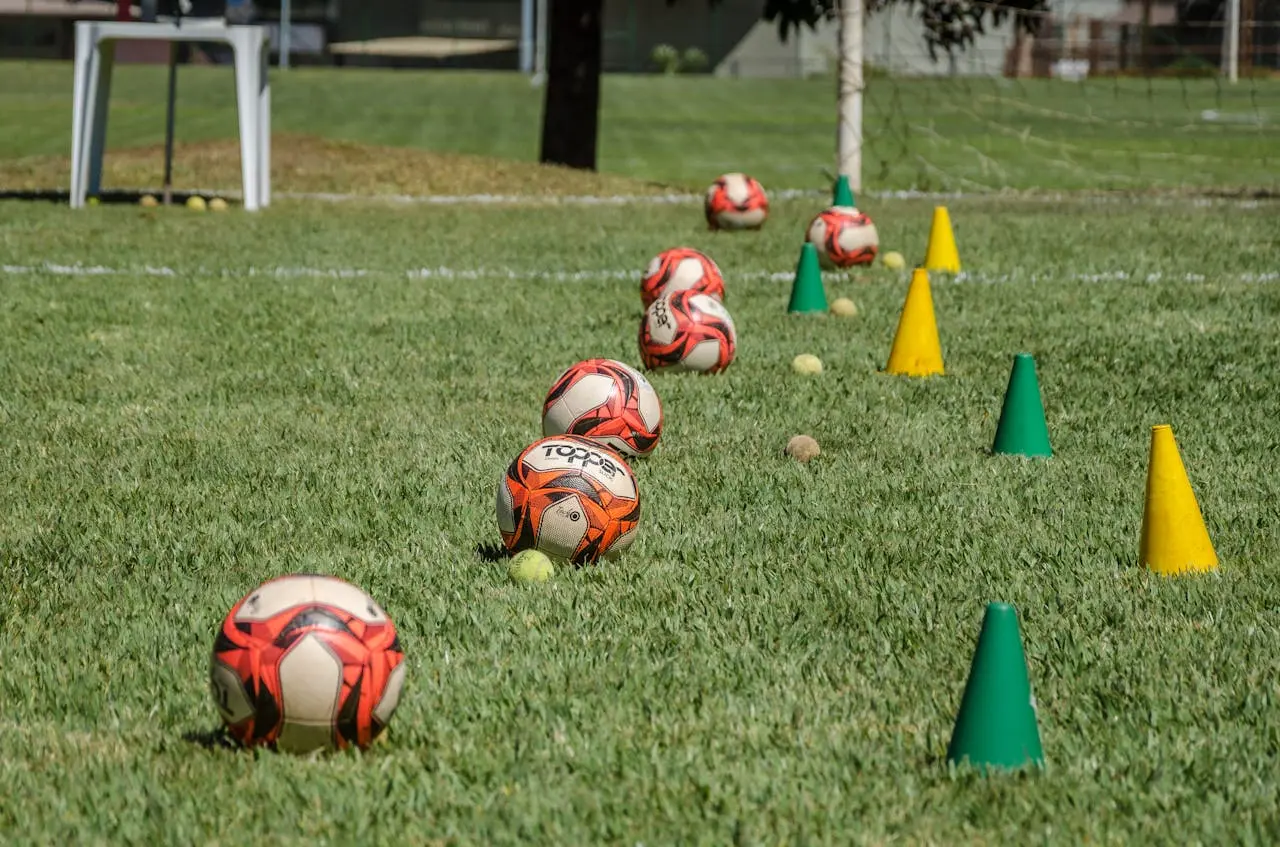
But playing alone isn’t enough. How a coach sets up a drill matters just as much as running it. A cone isn’t just a marker for where a player needs to go. It can represent a defender, a pressing trigger, a channel to attack into. When coaches explain what the environment is simulating before the drill starts, players stop just executing and start reading. They understand the problem they’re solving, not just the route through it.
Give players real problems to solve on the field. When should you play forward? When do you hold the ball? Where should you be when your teammate has possession on the right side? These are questions that develop intelligence, and intelligence is what separates good players from great ones.
Coaches: that means two things working together. Set up the drill with intention and explain what each element represents. Then let situations unfold, let players try to solve problems, and ask questions afterward to help them see what you saw. “What did the cone represent there?” is a better question than “Why didn’t you play forward?” One builds a player who understands the game. The other just makes them feel bad about a decision they didn’t have the context to make correctly.
That combination, clear setup and guided reflection, builds players who think for themselves. Which is what you want when the game kicks off Saturday morning and you’re on the bench.
Physical Development Is About More Than Fitness
Running lines at the end of practice to build fitness is one of the least effective things you can do for developing young soccer players. Soccer fitness is best built through soccer.
High-intensity small-sided games will condition players far more effectively than laps around a field, and they’ll enjoy it more. But physical development goes beyond cardiovascular fitness. Coordination, balance, agility, and body control are all trainable, and they have a massive impact on technical ability.
For younger players especially, the athletic foundation they build now will determine how quickly they develop skill and how resilient they are to injury as they grow. Simple footwork exercises, change of direction drills, and bodyweight strength work belong in every development program, not just in elite academies.
The Mental Side Is Where Player Development Really Happens
You can have all the physical tools and technical ability in the world, but if a player falls apart under pressure or loses confidence after a bad game, development stalls.
Mental resilience, self-awareness, and a growth mindset are just as trainable as a left-footed cross. And they start with the culture coaches create.
Does your training environment celebrate effort as much as outcome? Do players feel safe making mistakes? Is feedback honest but encouraging? These aren’t soft questions. They’re development questions.
At South Van FC, every player in the academy has an Individual Development Plan (IDP) that tracks mental development alongside the technical, tactical, and physical pillars. A player’s response to a hard session, a mistake, or critical feedback is part of their development story, and it gets coached as seriously as anything else on the field.
The players who push through hard sessions, who ask for feedback, who watch their own mistakes without making excuses: those are the players who keep improving year after year.
For players: how you respond to criticism and setbacks is one of the most important soccer skills for kids to build. Not just on the field, but anywhere.
Consistency Beats Intensity Every Single Time
The player who trains thoughtfully three times a week for a year will outpace the player who trains intensely for a month and then loses motivation. Development is not a sprint. It’s not even a marathon. It’s just showing up, with purpose, day after day.
For coaches, that means building sessions that players want to come back to. For players, it means showing up even on the days you don’t feel like it, and finding something small to work on even when things feel easy.
Progress is rarely dramatic. It’s usually quiet. A first touch that felt awkward that now feels natural. A defensive decision that used to confuse you that now feels obvious. Those moments are the result of hundreds of small training sessions adding up.
The Long Game
Youth soccer player development isn’t a shortcut. There’s no drill that fixes everything, no single session that transforms a player overnight. But there is a clear path: build technique in context, develop tactical intelligence through playing, take physical development seriously, create a culture where the mental game is valued, and show up consistently.
That’s the framework South Van FC builds every program around. Four pillars, developed intentionally, for every player, every session.
Whether you’re a coach designing training sessions or a player looking to get better, the formula is simple. It’s just not always easy. Start this week with one thing you can do better, and then do it again next week.
That’s the long game. And it’s worth playing.
Harjit Kainth is the founder, head coach, and academy director at South Van FC. He built the club from the ground up in South Vancouver with a focus on long-term player development, and oversees both the youth academy and the VMSL men’s team. If you have questions about the programme or want to talk development, reach out at southvanfc@gmail.com.
South Van FC is a community football club based in South Vancouver, BC. We run a youth academy, an adult 18+ program, and a VMSL Men’s team, built around one philosophy: develop real players, technically sharp, tactically aware, and mentally tough. Learn more at southvanfc.com.