
Your kid rolls an ankle on the pitch and goes down. Practice stops. Everyone looks. You jog over wondering how bad it is.
It might not be serious. But what you do in the next 24 to 48 hours will go a long way toward determining how quickly they’re back playing, and whether a small injury stays small.
Why the First 48 Hours After a Soccer Injury Are Critical
The moment a tissue gets damaged (a sprain, a strain, a hard knock) and your body triggers an inflammatory response. That’s normal. That’s healing starting. But when swelling gets ahead of things early on, it slows the process down and makes pain harder to manage.
Getting the first two days right doesn’t mean doing anything complicated. It means keeping the injury from getting worse while healing begins.
Youth soccer players in Vancouver are still physically developing, which makes early injury care especially important. The decisions made right after an injury can affect both how quickly and how completely a player bounces back.
You don’t need a medical background to handle this well. You need to know the approach and follow through with it.
Rest: What It Actually Means
Rest doesn’t mean total stillness for two days. It means taking load and pressure off the injured area.
If it’s an ankle, that means no running on it. No testing it at the next training session to see how it feels. The tissue needs a short window to start healing without being pushed. Trying to work through the pain in the first 24 hours almost always sets things back.
For youth players in Vancouver soccer programs, this can be a hard conversation. Kids want to train. Parents don’t want them to miss games. But pulling back now, even for a few days, is almost always the faster way back.
Keep them moving in ways that don’t load the injury. Walks, upper body work if they’re older, anything that doesn’t stress the damaged spot. Just stay off the injured area.
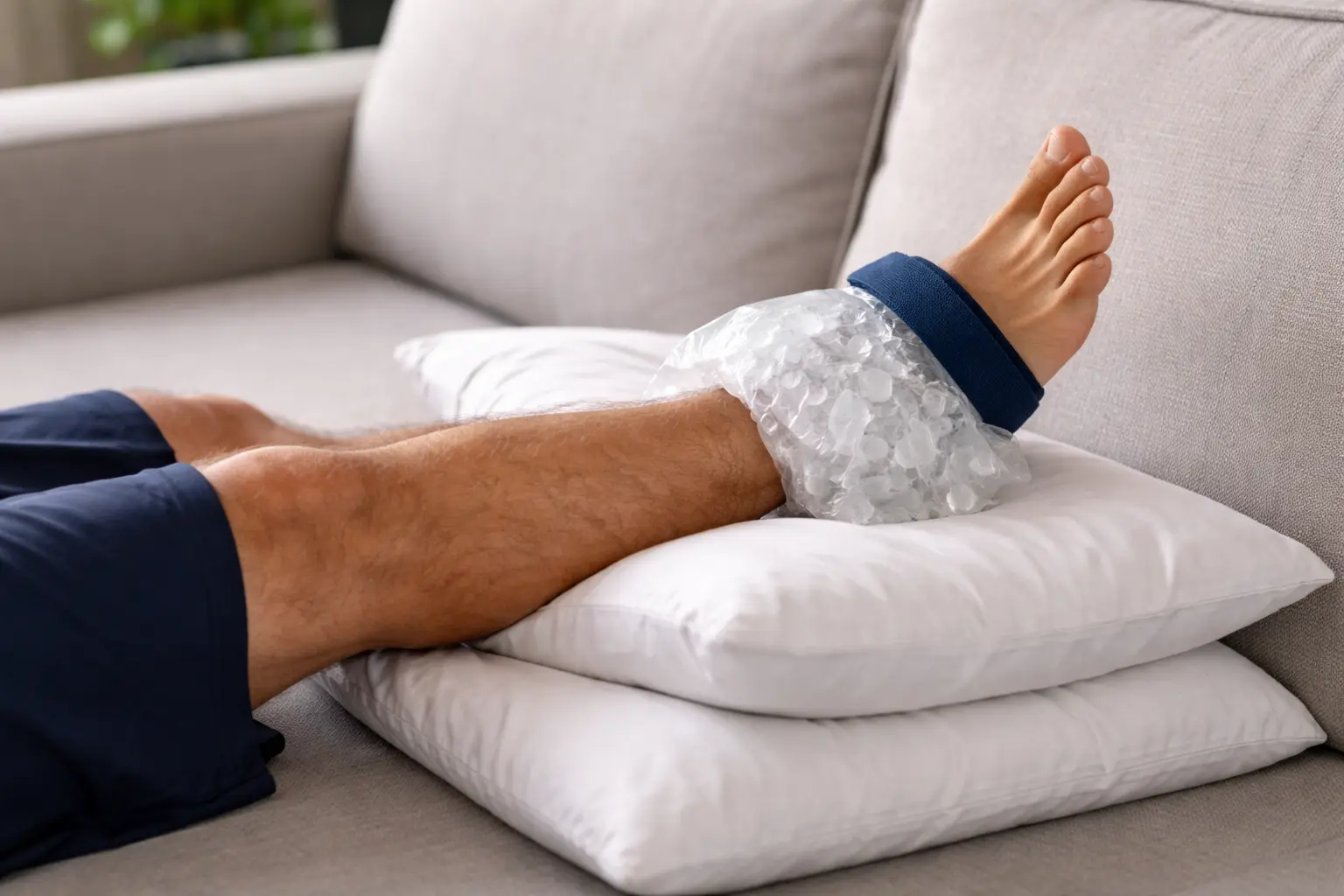
How to Use Ice Properly After an Injury
Ice is most useful in the first 48 hours. After that, the benefit drops off significantly.
The goal is reducing pain and managing swelling at the injury site. Always apply ice with something between it and the skin. A dish towel works. Direct skin contact for too long causes irritation.
Five minutes at a time, up to four times a day. That’s the protocol. Longer sessions don’t produce better results. They just increase the risk of skin damage.
If you’re at a field in Vancouver and don’t have ice handy, a cold wet cloth is a decent short-term substitute. Get proper ice on it when you’re home.
One thing worth knowing, icing is a symptom management tool. It reduces pain and limits swelling in the short term. It’s not accelerating healing on its own. Use it as part of the early care routine, not as the whole plan.
Compression and Elevation
Compression means wrapping the injured area with an elastic bandage or sliding on a compression sleeve. Done right, it limits fluid buildup and provides some structural support.
Snug is what you’re after. It should feel firm. If there’s tingling, numbness, or the skin looks pale or starts to discolor, loosen it right away. Those are signs it’s too tight.
Elevation is straightforward. Get the injured limb above heart level when possible. For a knee or ankle, that means lying down with a pillow propped underneath. The idea is that gravity helps drain fluid away from the injury site, which cuts down on swelling.
It doesn’t have to be elaborate. Sitting on the couch with a leg propped up on the armrest while they watch something counts. Just get it up.
Why an Early Assessment Matters
RICE manages the early symptoms. It’s a useful short-term approach for acute soccer injuries. But it’s not a diagnosis, and it’s not a rehab plan.
Within the first day or two, booking a proper assessment with a physiotherapist or sports medicine doctor makes a real difference. They can identify what’s actually damaged, rule out anything more serious like a fracture, and figure out what the next steps should look like.
Starting rehab early, when a qualified provider says it’s appropriate, is one of the biggest factors in how quickly players get back on the field. Waiting until it “feels better” and then hoping for the best is how minor injuries turn into month-long setbacks.
In Vancouver, access to sports physio is generally pretty good. Don’t sit on it. Book the assessment in the first couple of days and get a real picture of what you’re dealing with.
Conclusion
A sprain or strain at soccer practice doesn’t have to mean a long time off. Rest, ice, compression, elevation in the first 48 hours. Then get it assessed by someone who can tell you exactly what’s going on.
That’s the whole approach. It’s not complicated. The difference is actually doing it instead of hoping the injury sorts itself out.
At South Vancouver FC, player health is built into how we run every program. Whether your child is just starting out in youth football or developing through a competitive stream in Vancouver, we want them training safely and recovering smart. Learn more about our approach at southvanfc.com/soccer-academy.
Shanil Sharma is a Kinesiologist at SNS Fitness Rehab and contributes to South Van FC on player development, recovery, and injury prevention.
South Van FC is a community football club based in South Vancouver, BC. We run a youth academy, an adult 18+ program, and a VMSL Men’s team, built around one philosophy: develop real players, technically sharp, tactically aware, and mentally tough. Learn more at southvanfc.com.